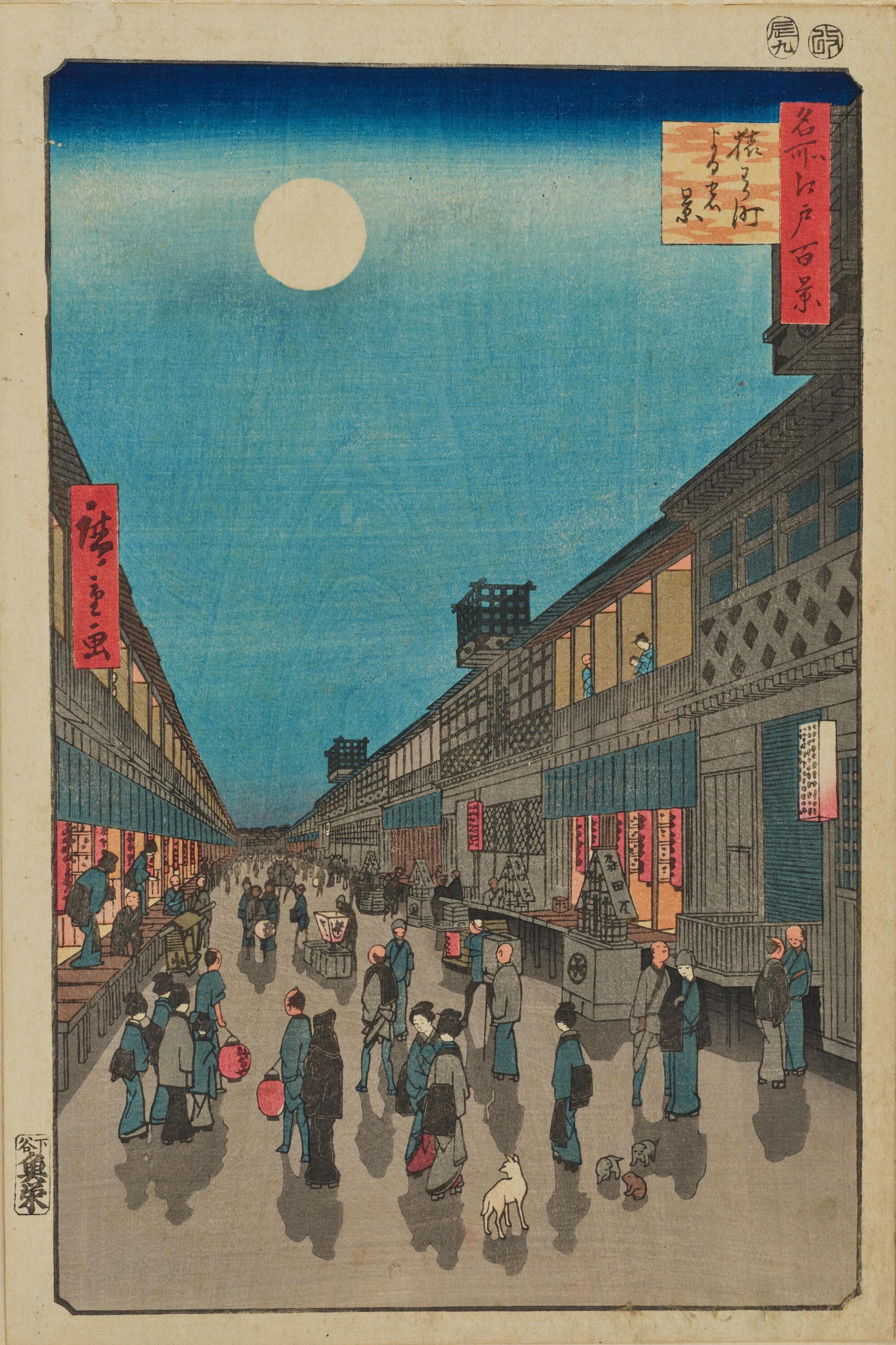
名所江戸百景・猿若町よるの景
出典:国立文化財機構所蔵品統合検索システム
Tsukudani: The Aesthetics and Science of Japanese Food Preservation
Tsukudani is a traditional Japanese preserved food made by simmering seafood, seaweed, or vegetables in a concentrated mixture of soy sauce, sugar, and mirin. Originating in the 17th century, it remains a staple of the Japanese pantry, cherished as a flavorful accompaniment to steamed rice.
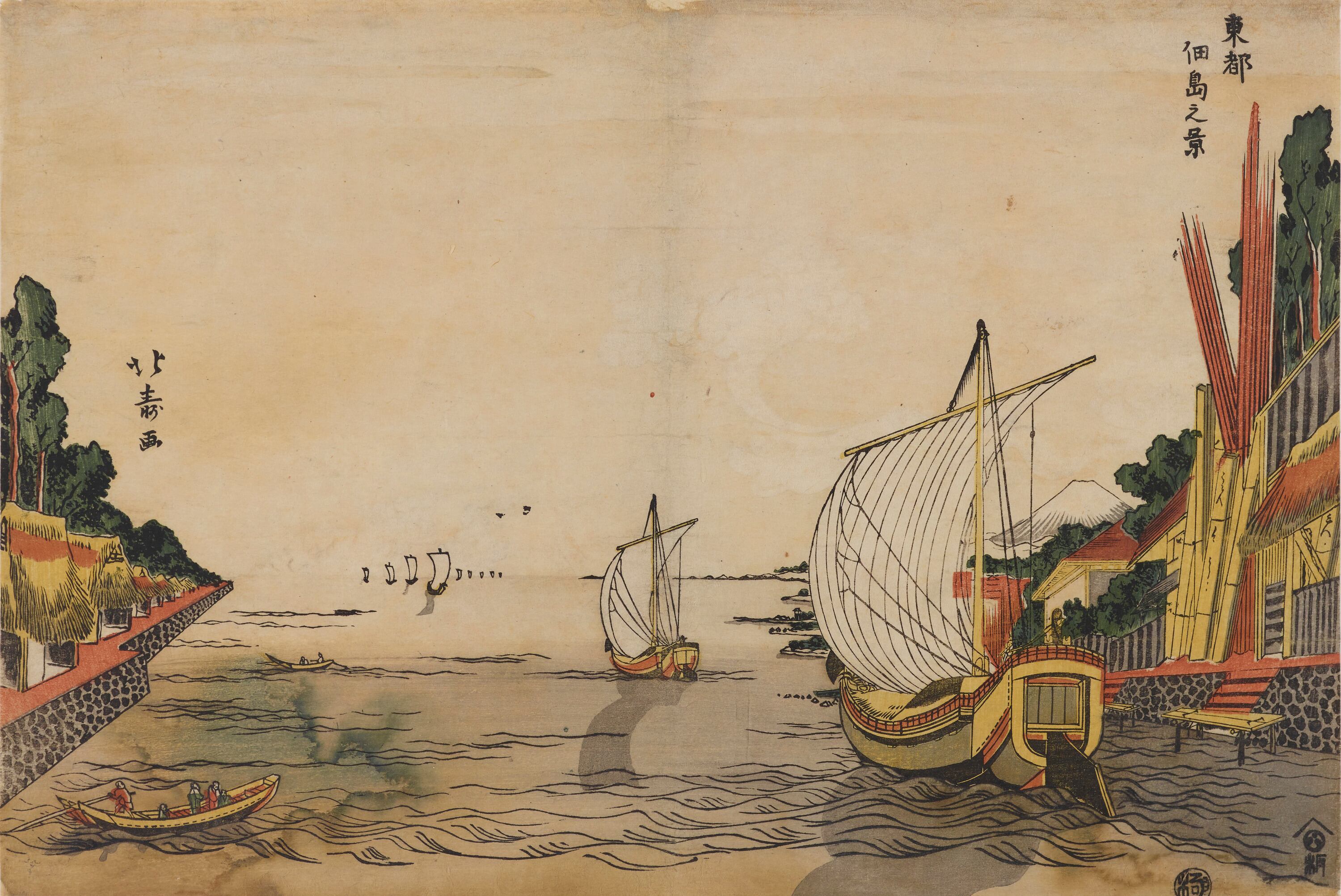
東都佃島之景
出典:国立文化財機構所蔵品統合検索システム
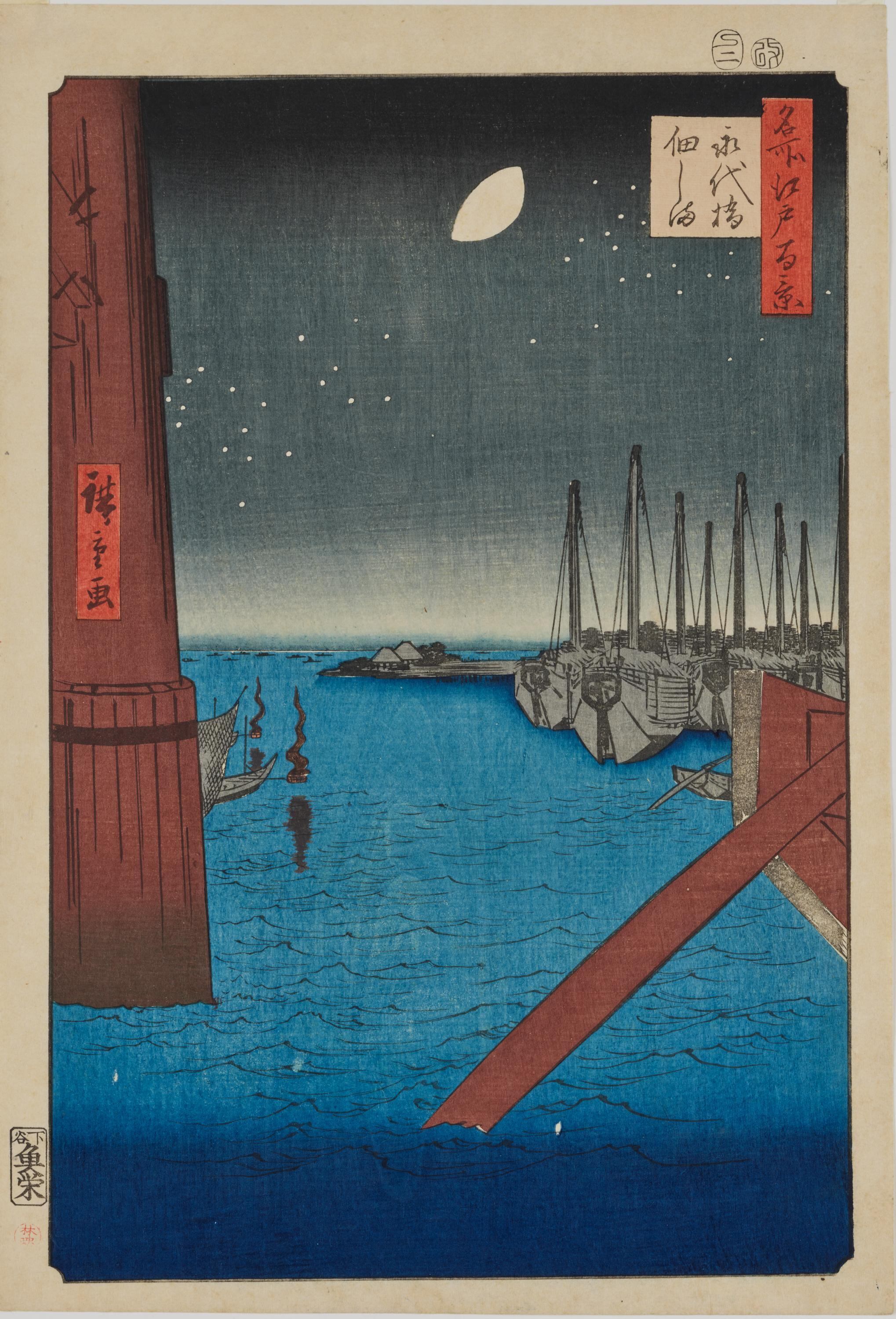
名所江戸百景・永代橋佃島
出典:国立文化財機構所蔵品統合検索システム
I. Historical Context: From the Fishermen of Tsukudajima
The name "Tsukudani" is derived from Tsukudajima, an island located in present-day Chuo-ku, Tokyo.
At the beginning of the 17th century, after establishing the Edo Shogunate, the Shogun Tokugawa Ieyasu invited skilled fishermen from Tsukuda Village in the Settsu region (modern-day Osaka) to the new capital. He granted them land at the mouth of the Sumida River, which became known as Tsukudajima.
Historical records suggest that these fishermen simmered small, unsold fish in salt or soy sauce to create a hearty, long-lasting food for their own consumption. This practice eventually gained popularity among the citizens of Edo for being affordable and durable, leading to its commercialization as a signature specialty of the city. Note: While various legends link this food directly to specific military episodes involving the Shogun, it is a historical fact that the fishermen of Tsukudajima were the primary stewards of this culinary culture.
II. The Principles of Preservation: How It Works
What distinguishes Tsukudani from standard simmered dishes (nimono) is its extended shelf life. This is achieved through specific culinary-scientific principles:
Reduction of Moisture and Osmotic Pressure By simmering ingredients slowly over a long period with high concentrations of soy sauce and sugar, the moisture content is significantly reduced. This process increases "osmotic pressure," creating an environment where it is difficult for microorganisms to thrive.
Bacteriostatic Effects of Seasonings High salinity and sugar content act as natural preservatives, helping to extend the period during which the food remains safe to eat.
Flavor Development (The Maillard Reaction) During the heating process, a chemical reaction occurs between sugars and amino acids, known as the Maillard reaction. This contributes to the deep, dark color and the complex, savory aroma characteristic of Tsukudani. While common in many Japanese dishes using soy sauce, in Tsukudani, it is essential for creating its concentrated umami profile.
III. Diversity of Ingredients and Classification
Tsukudani does not refer to a specific ingredient, but rather to the method of preparation. Consequently, a vast variety of materials are used across Japan:
Seafood: Clams (Asari/Shijimi), small fish (Ikanago/Wakasagi), Kelp (Konbu), and Nori seaweed.
Agricultural Products: Butterbur (Fuki), Ginger, Soybeans, and Shiitake mushrooms.
Others: Beef (known as Shigure-ni) and, in certain regions, edible insects.
The style also varies depending on the intensity of the simmering process, ranging from firm, dry versions to "semi-simmered" styles that retain the natural softness of the ingredients.
IV. Modern Value: A Sustainable Food Culture
The origin of Tsukudani lies in the "wisdom of resourcefulness"—the practice of ensuring that even small fish or difficult-to-eat materials were not wasted but transformed into a delicious, storable food.
This embodies the Japanese spirit of "Mottainai" (a sense of regret over waste) and the modern concept of Sustainability. While modern refrigeration has reduced the need for the extreme preservation (shelf-stability for months) of the past, the philosophy of respecting and fully utilizing the life of every ingredient continues to be passed down by artisans today.
Closing Thoughts Every bite of Tsukudani carries a story of 400 years of ingenuity. As you enjoy its deep, savory flavor, you are experiencing a culinary tradition that balances the necessity of preservation with the refined palate of Japanese history.
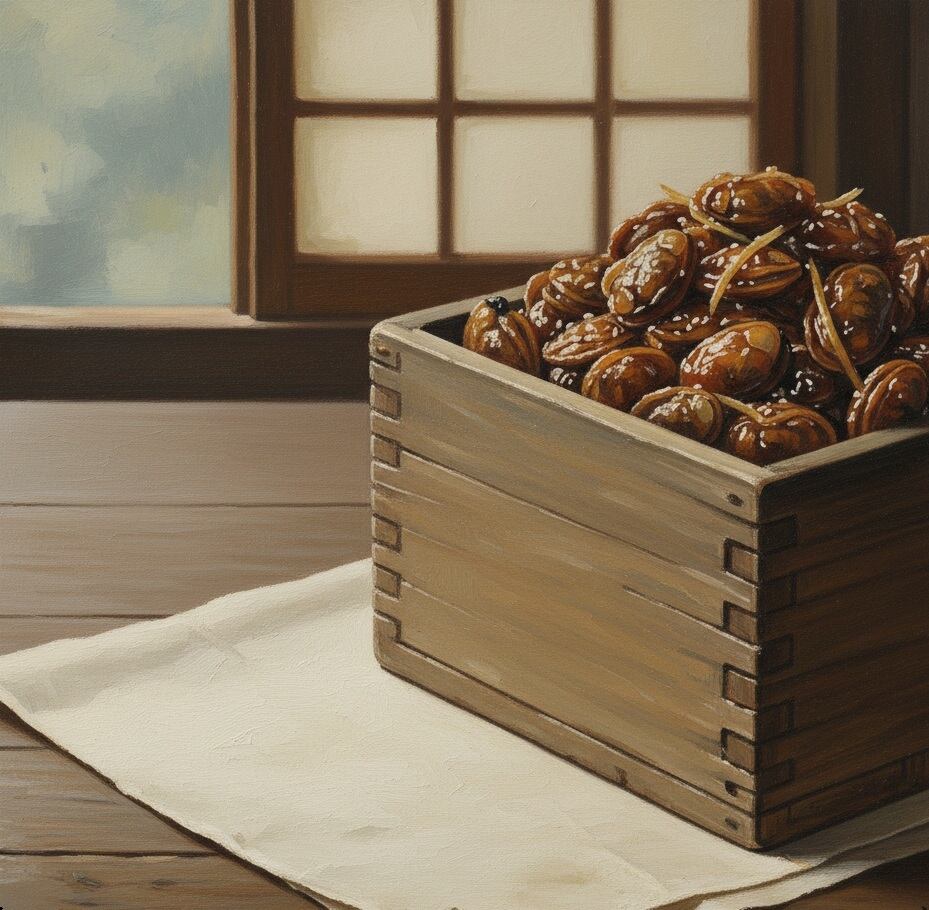
From its beginnings in Tsukudajima, Edo, Tsukudani is said to have spread across Japan.
Shaped by the wisdom of preservation, it captures the essence of its ingredients in every bite.
A taste born from nature and carried through time.
Perhaps, in a quiet moment, you may discover its depth for yourself.
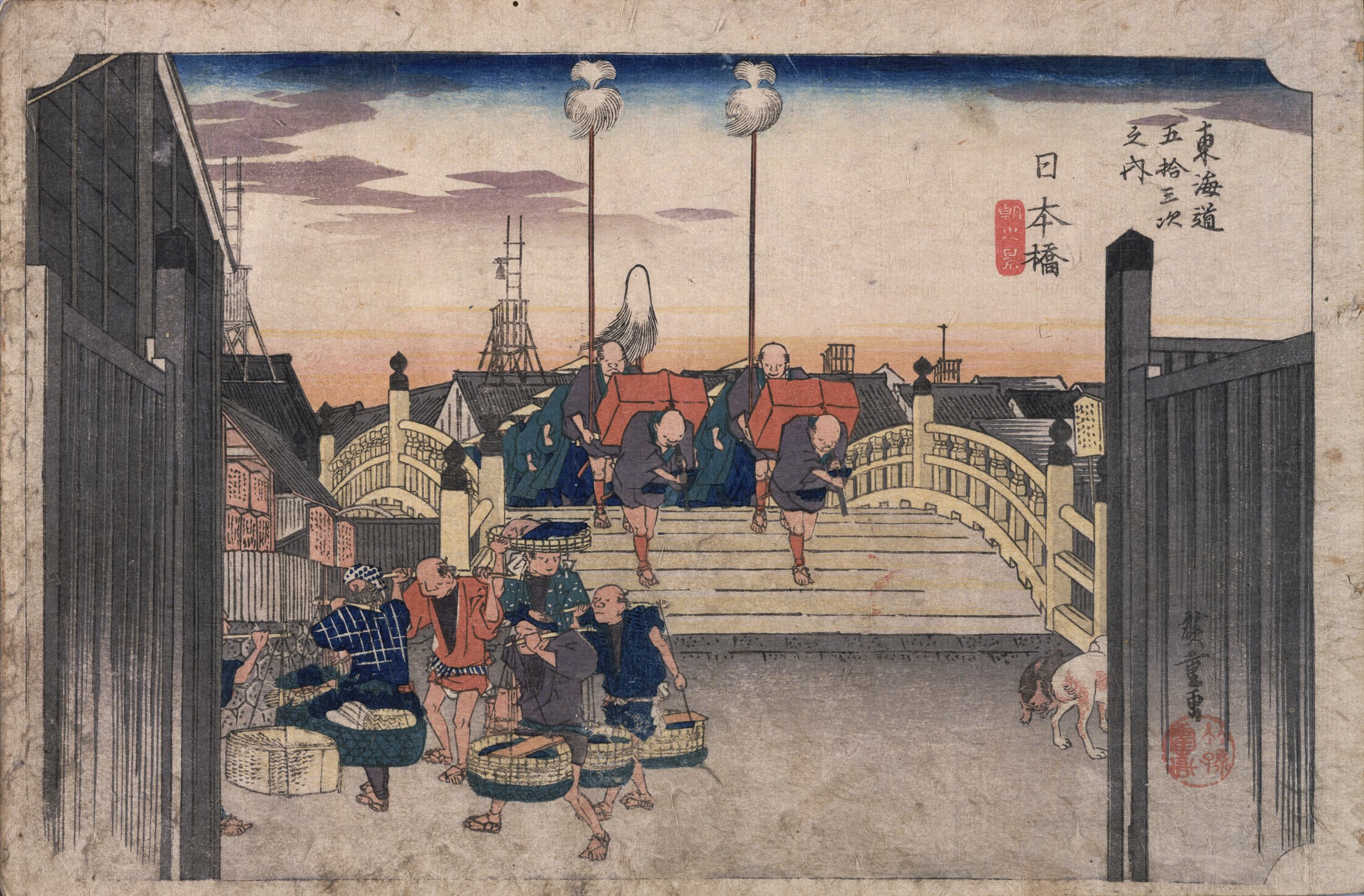
東海道五拾三次 日本橋
出典:国立文化財機構所蔵品統合検索システム